
Prop Center
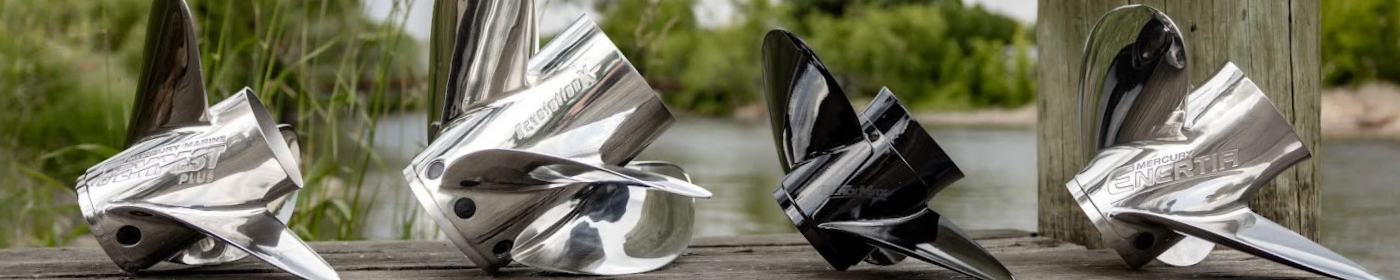
Boat Propeller Selection & Education Center
Choosing the right propeller starts with understanding a few basic measurements and design features. Pitch, diameter, blade count, material, and rotation all play a role in finding the right setup for your boat.
Welcome to the Gregor’s Marine Prop Center, your resource for boat propeller selection and education. Learn how pitch, diameter, blade count, materials, and other factors affect performance, then use our selection tools and resources to help find the right propeller for your boat.
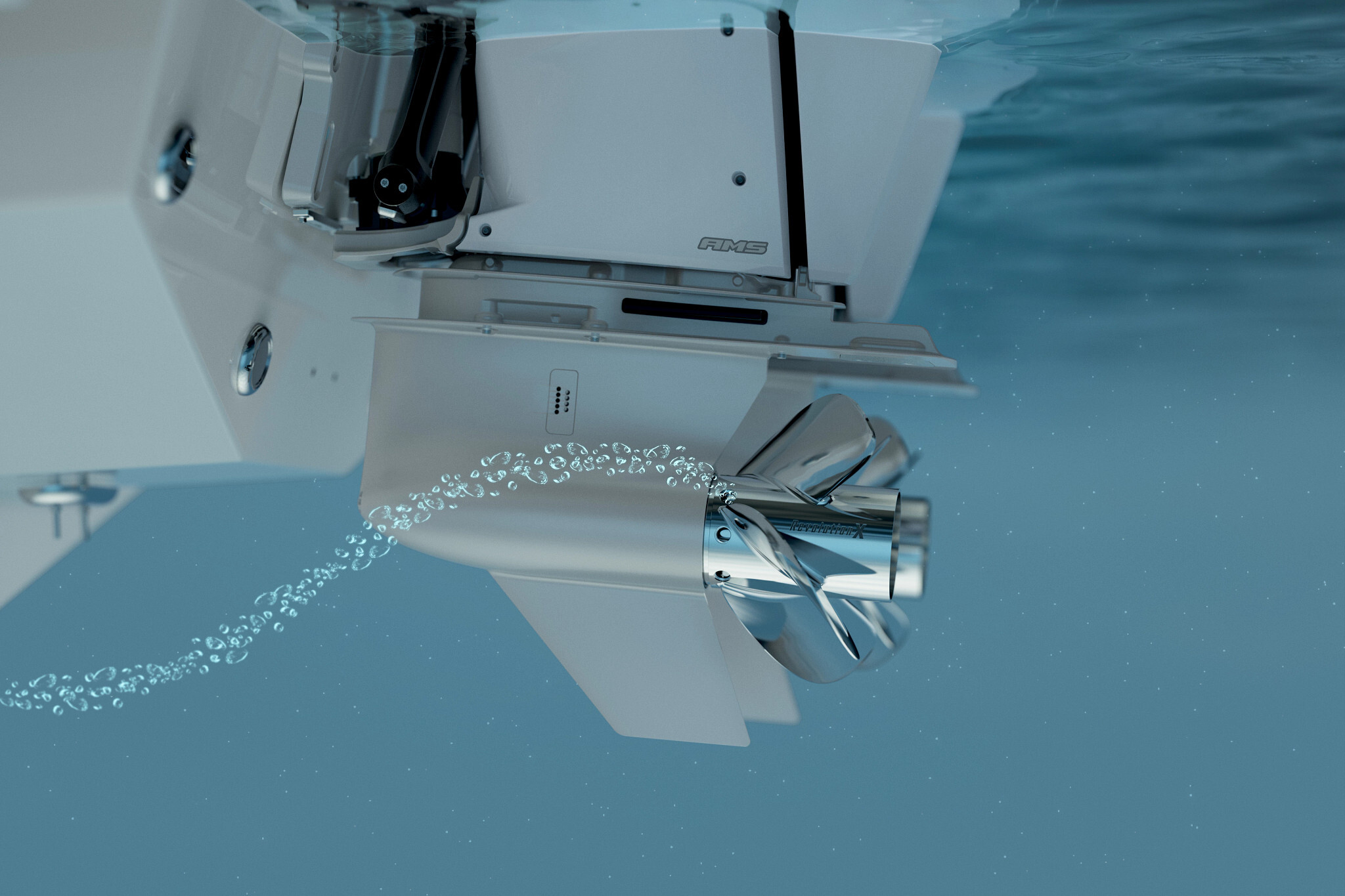
Prop Slip Calculator
Calculate your propeller slip using pitch, RPM, gear ratio, and boat speed to better understand your current setup and real-world performance.

Prop Selector
Take the guesswork out. Use Mercury’s Prop Selector to find propeller recommendations based on your boat, engine, and boating style.
Understanding Propeller Basics
The right propeller can make a noticeable difference in how your boat accelerates, handles, and performs. You don't need to know every detail of propeller design, but understanding a few basics can make choosing the right prop much easier.
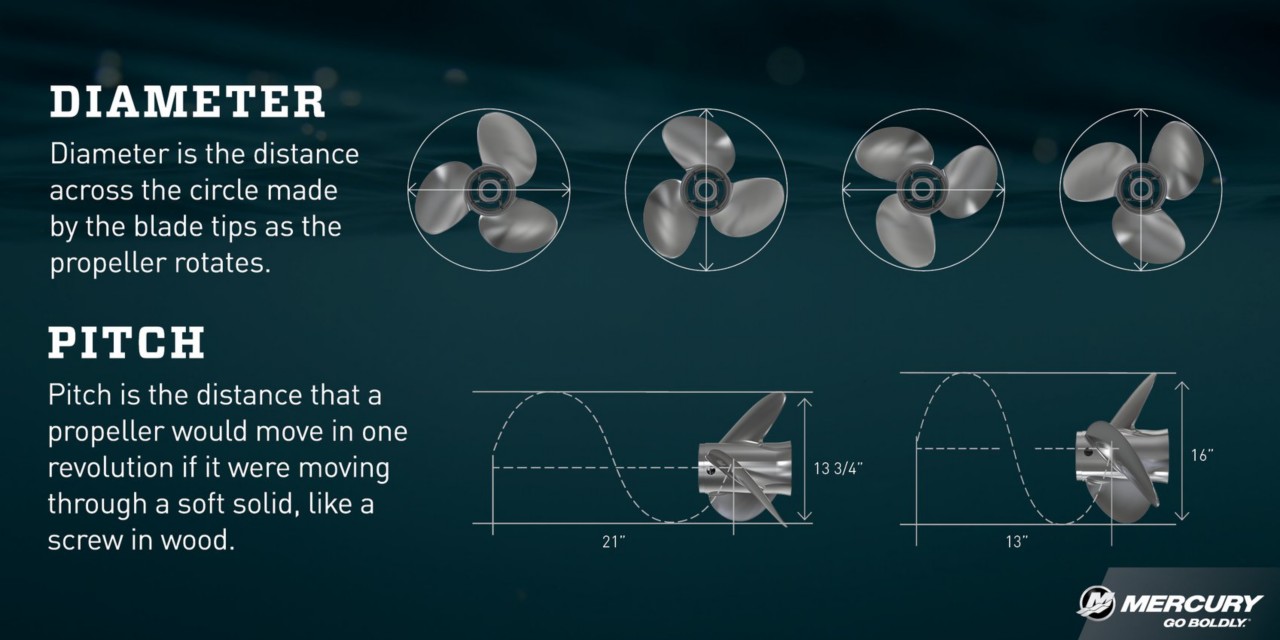
Diameter
Diameter is the distance across the circle made by the propeller blades as they rotate. It is typically the first number in a propeller's size. For example, a 14 1/2 x 19 propeller has a 14 1/2-inch diameter and 19-inch pitch.
Diameter varies based on the engine, gearcase, boat, and propeller design, so bigger doesn't necessarily mean better.
Pitch
Pitch is the theoretical distance a propeller would move forward with each full rotation (or "revolution"). A 19-inch pitch prop would theoretically move 19 inches per revolution, although actual movement is less because of propeller slip.
Generally, more pitch lowers engine RPM, while less pitch raises RPM and can improve acceleration. The goal is to match the propeller to your boat while keeping the engine within its recommended wide-open-throttle (WOT) RPM range.
3-Blade vs. 4-Blade
3-Blade propellers are a popular all-around choice, offering a good balance of efficiency, acceleration, and top-end speed. 4-Blade propellers provide more blade area, which can improve grip, acceleration, planing, and handling, especially with heavier loads.
Propeller Rotation
Propellers are designed for either right-hand or left-hand rotation. Most single-engine boats use right-hand rotation, while counter-rotating propellers are common on multi-engine setups. When replacing a propeller, make sure the new prop matches the rotation required by your engine and gearcase.
Choosing the Right Propeller
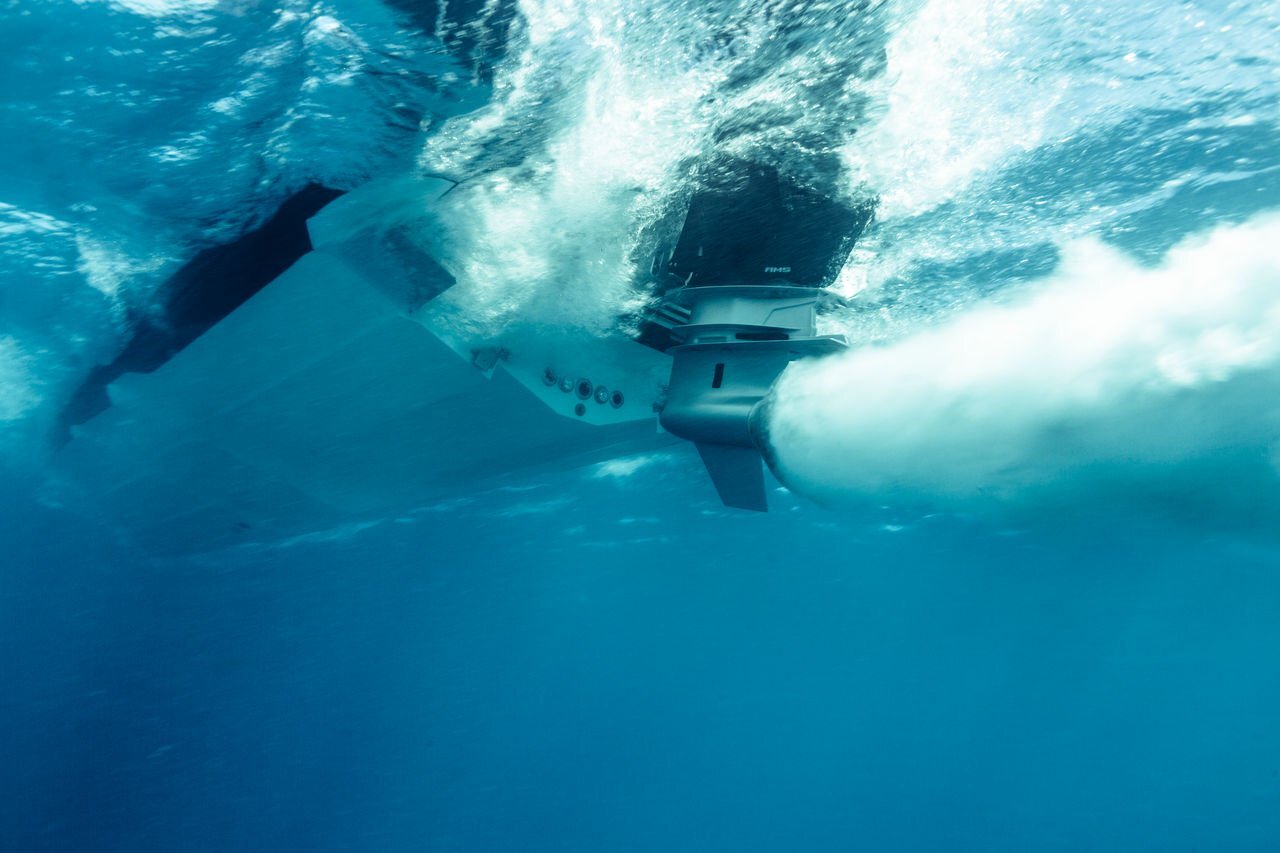
The best propeller depends on your boat, engine, typical load, and what you want to improve. Some boaters want quicker acceleration and better planing, while others prioritize top-end speed, cruising efficiency, or better performance with heavy loads.
The goal is to find a propeller that delivers the performance you want while allowing your engine to operate within its recommended wide-open-throttle (WOT) RPM range. If you're unsure where to start, use the Mercury Prop Selector above to narrow down your options.
Continue Learning About Propellers
Boat Propeller School: How Propeller Design Affects Performance
Go beyond the basics and learn how rake, cup, blade geometry, slip, and other design characteristics affect real-world performance.
Mercury Marine Guides