
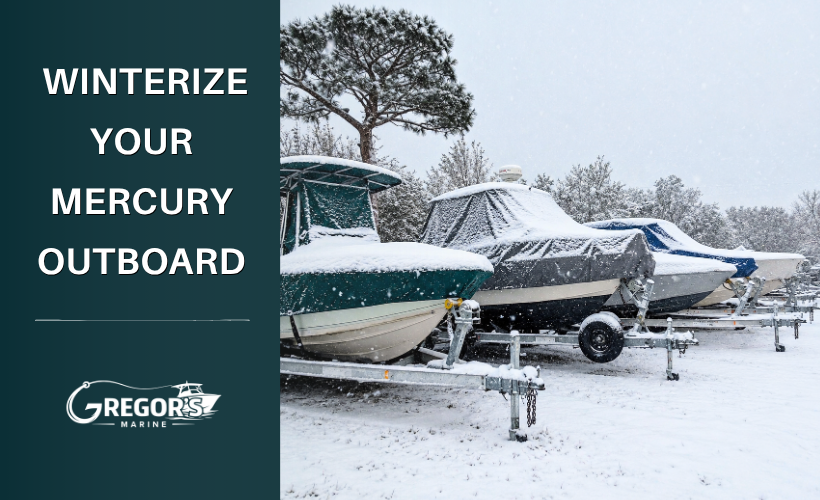
How to Winterize a Mercury Outboard: 7 Steps Before Storage
If your outboard is going to sit for several months, parking the boat and waiting for spring isn't the best plan. Fuel can deteriorate, batteries discharge, corrosion continues, and water hiding inside a gearcase becomes especially concerning where freezing temperatures are possible.
Mercury's exact winterization procedure varies by engine, so your owner's manual should always be the final reference for your model. But whether you're storing a Mercury FourStroke, Verado, Pro XS, or an older Mercury outboard, these are the major areas that deserve attention.
1. Treat the Fuel Before the Boat Sits
Start with fresh fuel and add the appropriate marine fuel stabilizer before long-term storage.
For Mercury engines, Mercury Quickstor Fuel Stabilizer is specifically designed for fuel that will remain in the tank during storage. It helps prevent regular and ethanol-blended gasoline from breaking down and causing fuel-system problems while the boat isn't being used.
Before storing the boat:
- Add Quickstor to fresh fuel using the dosage on the bottle.
- Run the engine afterward so treated fuel circulates through the fuel lines and engine fuel system.
- Don't assume every fuel tank should be filled completely. The proper storage level can depend on the tank and fuel-system design.
- Stabilizer preserves fuel that's still in good condition. It won't restore gasoline that has already gone stale.
One step that's easy to miss: Don't add Quickstor and immediately park the boat. The stabilized fuel needs to reach the engine, not just sit in the tank.
- Shop Mercury Quickstor Fuel Stabilizer
2. Change the Engine Oil and Filter
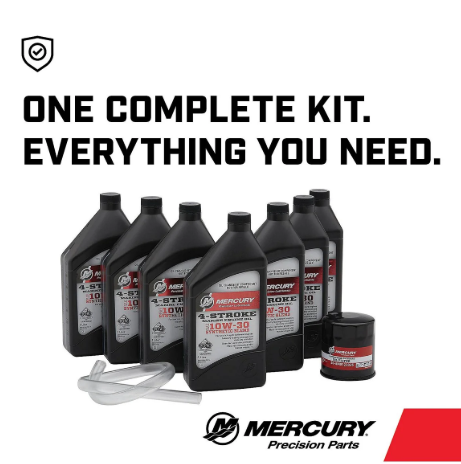
For a four-stroke Mercury, winterization is a convenient time to change the engine oil and filter if service is due. That leaves fresh oil in the engine while it sits rather than used oil containing moisture and combustion byproducts.
Follow the oil-change procedure and oil specification for your particular engine.
One easy-to-miss detail: When you remove the old oil filter, check that its rubber gasket came off with it An old gasket can stick to the engine. Installing the new filter over it creates a double gasket, which can cause an oil leak once the engine is running.
- Shop Oil Change Kits
- Shop Maintenance Kits
3. Follow the Correct Internal Engine Storage Procedure
Don't assume every Mercury gets winterized with the same can of fogging oil.
The procedure depends on the engine. Mercury distinguishes between four-stroke and conventional two-stroke engines and direct-fuel-injected two-strokes such as OptiMax when describing internal corrosion protection for storage.
Before removing spark plugs or introducing oil into the cylinders, check the storage procedure for your exact engine.
This is one winterization step where following generic advice intended for a different outboard isn't worth the risk.
4. Change the Lower Unit Gear Lube and Inspect What Comes Out
Don't just drain the old gear lube and throw it away. Look at it.
Watch for:
- Milky or creamy gear lube, which can indicate water contamination
- Water draining separately from the lubricant
- Larger metal pieces or an unusual amount of metal
- Damaged or questionable drain-plug seals
Water is particularly important to catch before winter storage. In a freezing climate, water inside the gearcase can freeze and expand. Even without freezing temperatures, water can compromise lubrication and contribute to internal corrosion and damage.
Our Mercury Lower Unit & Gearcase Guide explains what's inside the lower unit, common gearcase problems, repair versus replacement, and how to identify the correct replacement if the damage is more extensive.
Mercury Lower Unit & Gearcase Guide
5. Remove the Propeller
Winterization is a good excuse to inspect an area many boat owners rarely see.
Pull the propeller and:
- Check for fishing line wrapped around the prop shaft.
- Inspect around the prop-shaft seal.
- Look for obvious prop or hub damage.
- Clean the prop shaft.
- Lubricate the shaft with the appropriate marine grease before reinstalling the prop.
Fishing line can work its way tightly against the prop-shaft seal. If it damages the seal, water can enter the gearcase.
So if you find fishing line buried around the shaft, don't just cut it off and reinstall the prop. Look at the seal area and pay extra attention to the condition of the gear lube.
6. Inspect Anodes, Lubrication Points, and Corrosion Protection
You don't need a separate winterization project for every component. Use this opportunity to inspect the rest of the outboard before it sits.
Check:
- Sacrificial anodes: Mercury recommends replacement when they're about 50% deteriorated. Never paint over them.
- Grease points: Use your owner's manual to find the lubrication points specific to your engine.
- Power trim fluid: Where applicable, inspect its condition. Mercury notes that pink or milky trim fluid can indicate water contamination.
- Painted surfaces: Look for chips or exposed metal where corrosion can start.
- Corrosion protection: Apply the appropriate corrosion inhibitor where specified, especially on engines used in saltwater.
Here's another detail people sometimes overlook: an anode that never deteriorates isn't necessarily a good sign.
Sacrificial anodes are designed to wear as they protect other metal. If an anode remains almost untouched season after season, its installation, electrical contact, and material are worth checking.

7. Prepare the Battery and Store the Outboard Down
Don't leave a partially discharged battery sitting for months.
Before storage:
- Fully charge the battery and disconnect it from the boat to eliminate small parasitic draws from electronics and onboard systems.
- Clean and inspect the terminals.
- Check electrolyte levels on serviceable flooded batteries.
- Maintain the battery according to its specific type and manufacturer's instructions.
Battery chemistry matters, so don't assume AGM, flooded lead-acid, and lithium batteries all have identical storage requirements.
Finally, Mercury recommends storing the outboard trimmed down in its vertical operating position. This allows water remaining in the engine to drain.
That's particularly important where temperatures fall below freezing. Water that can't drain can freeze and expand.

Do You Need to Winterize an Outboard in Florida?
Not necessarily in the same way someone in Michigan does.
Here in Florida, many boats stay in use all winter, and protecting an engine from months of hard freezes usually isn't the concern.
But if your boat is going to sit unused for a few months, long-term storage preparation still matters.
For a Florida boat, we'd pay particular attention to:
- Fuel condition and stabilization
- Battery maintenance
- Salt and corrosion
- Engine and gearcase lubricants
- Fishing line behind the prop
- Anode condition
- Lubrication points
So instead of thinking strictly about "winterization," think about how long the engine will sit. If you use your boat regularly throughout winter, staying on top of normal Mercury maintenance and saltwater care may make more sense than putting the engine into seasonal storage.
Before You Put the Boat Away
Winterization is a good opportunity to find small problems while they're still small.
If the gear lube comes out milky, find the leak. If you discover fishing line behind the prop, inspect the seal area. If an anode is nearly gone, replace it. And if your engine requires a specific internal storage procedure, follow the Mercury instructions for that engine rather than a generic winterization checklist.
If you'd rather have your Mercury serviced before extended storage, Gregor's Marine is an authorized Mercury Marine dealer in Largo, Florida. Call 727-596-5929 to schedule service.
-------------------------------------------------------------------------------------
Frequently Asked Questions
Should I change lower unit oil before winter?
If it's due, changing it before storage has an added benefit: you can inspect the old lubricant for water or abnormal metal before the engine sits for months.
Does every Mercury outboard need to be fogged?
No single procedure applies to every Mercury engine. Internal storage procedures vary by engine type and model, so check your owner's manual before using fogging oil or introducing oil into the cylinders.
Should an outboard be stored up or down during winter?
Mercury recommends storing the outboard in the vertical operating position so water can drain. This is especially important in freezing climates.
Should I winterize my boat in Florida?
If you use the boat regularly all winter, traditional freeze-related winterization usually isn't necessary. If the boat will sit for an extended period, fuel stabilization, corrosion protection, battery maintenance, lubrication, and other long-term storage steps are still worthwhile.
Recent Posts
-

How to Winterize a Mercury Outboard: 7 Steps Before Storage
If your outboard is going to sit for several months, parking the boat and waiting for spring isn't t …Sep 22nd 2026 -

Why You Should Change Your Lower Unit Oil Every Year
Why You Should Change Your Lower Unit Oil Every Year Changing your engine oil is a maintenance item …Sep 14th 2026 -

Signs Your Mercury Lower Unit Is Going Bad: What to Check
A lower unit problem doesn't always start with a dramatic failure. Sometimes the first clue is a new …Sep 14th 2026