
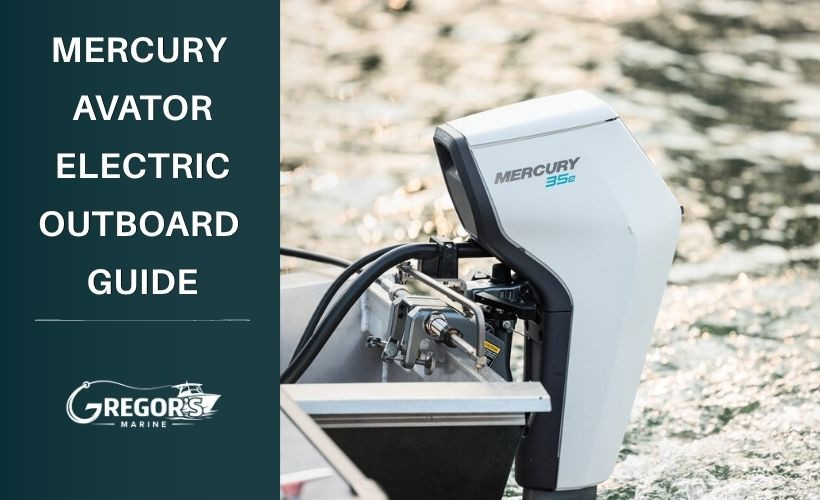
Mercury Avator Electric Outboards: A Complete Guide to Electric Boating
Electric outboards are becoming a real option for more boaters, and Mercury's Avator lineup brings electric propulsion to everything from small tenders and fishing boats to larger recreational applications.
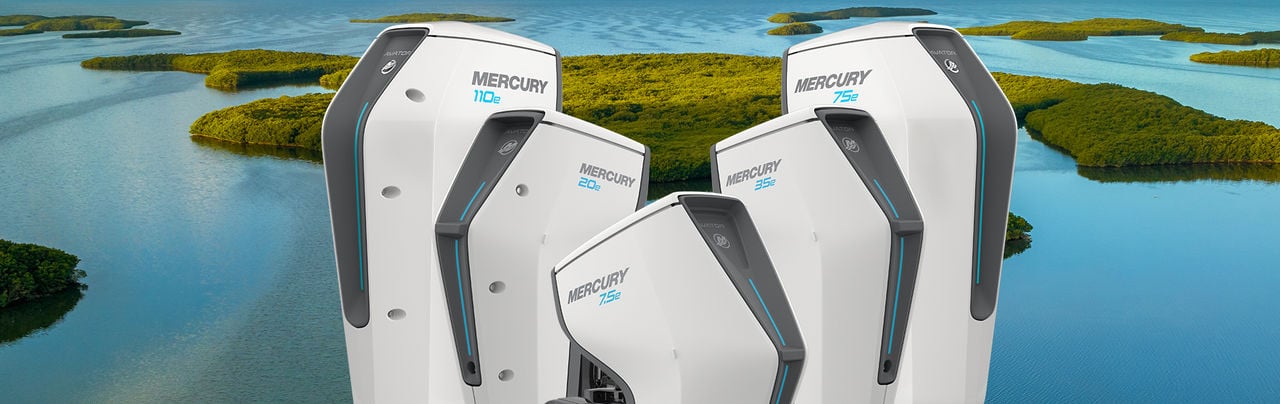
The Mercury Avator electric outboard lineup includes the Avator 7.5e, 20e, 35e, 75e, and 110e. Unlike a traditional Mercury FourStroke, Avator runs on battery power, offering quiet operation, zero direct exhaust emissions, and fewer routine engine maintenance items.
But electric propulsion isn't automatically the right choice for every boat. Understanding how Avator power ratings, batteries, range, and charging work can help you decide whether going electric makes sense for the way you actually use your boat.
What Is a Mercury Avator Electric Outboard?
Mercury Avator is a family of 48-volt electric outboard motors. Instead of a gasoline engine, the system uses battery-stored electricity to power an electric motor connected to the propeller.
The current lineup includes:
- Avator 7.5e - 750W rated prop-shaft power
- Avator 20e - 2,200W rated prop-shaft power
- Avator 35e - 3,700W rated prop-shaft power
- Avator 75e - 7,500W rated prop-shaft power
- Avator 110e - 11,000W rated prop-shaft power
One important detail is that 7.5e does not mean 7.5 horsepower, and the same applies to the rest of the lineup. The model numbers shouldn't be treated like the horsepower ratings on traditional gas outboards.
That's why selecting an Avator isn't as simple as replacing a 20 HP gas outboard with an Avator 20e. Boat size, hull design, weight, desired performance, battery capacity, and typical operating distance all matter.
How Do Avator Batteries and Range Work?
With a gasoline outboard, your fuel tank determines how much energy you have available. With an electric outboard, it's the battery.
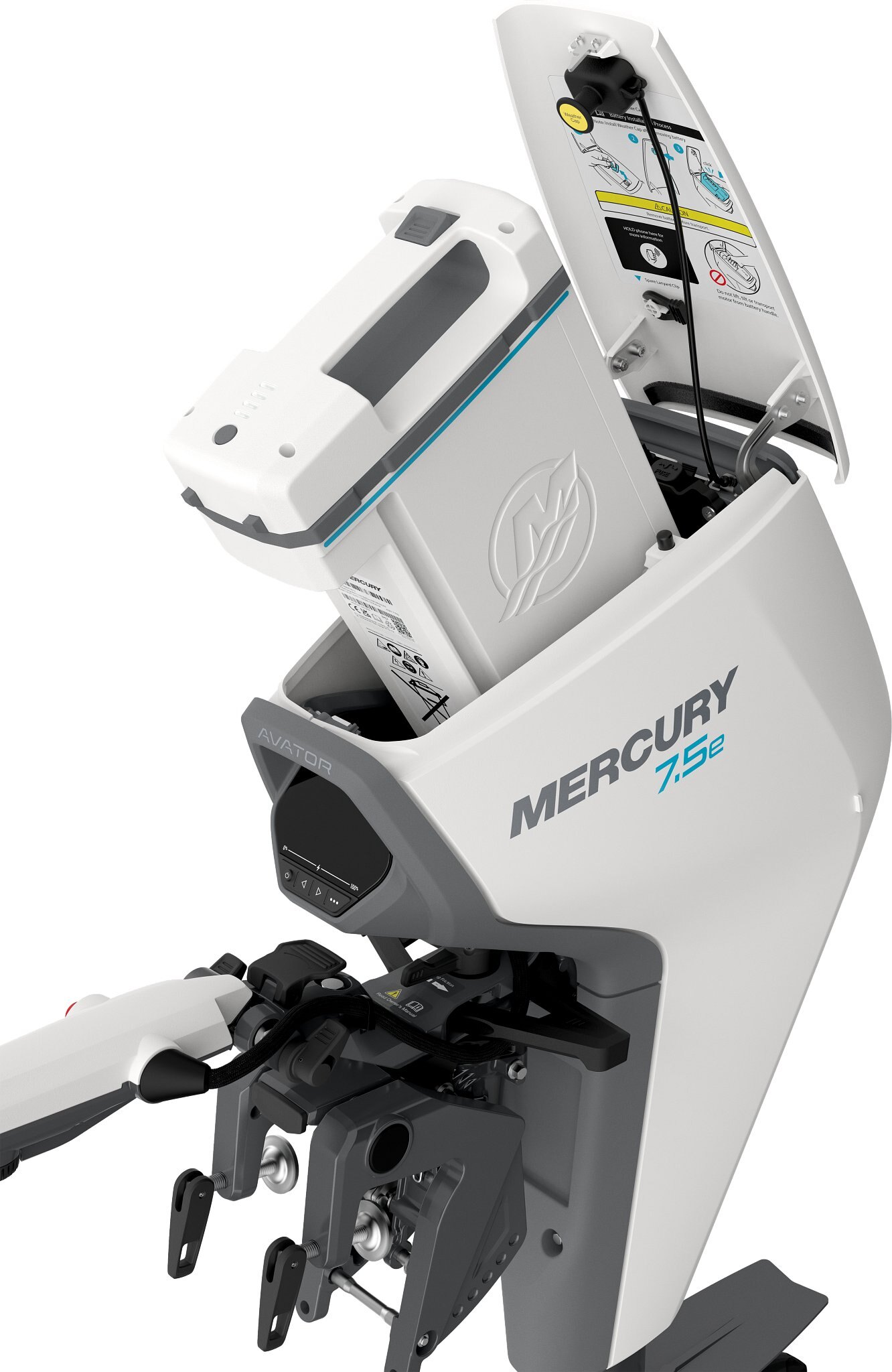
The smaller Avator 7.5e uses a removable 1,030Wh integrated lithium battery. The larger Avator models use remote battery systems, allowing the propulsion system and available battery capacity to be matched to the application.
So how far can a Mercury Avator go?
There isn't one useful answer because electric-outboard range depends heavily on the boat and how it's operated. Hull design, weight, passengers, wind, current, battery configuration, and especially operating speed can all affect range.
That last factor is particularly important. Running at a lower speed can significantly extend electric runtime and range. If you regularly operate at higher power, you'll consume the available battery energy much faster.
Where Does Mercury Avator Make the Most Sense?
Avator isn't intended to make gasoline outboards obsolete. There are simply some boating applications where electric propulsion has clear advantages.
Small tenders and dinghies are an obvious example. The Avator 7.5e's removable battery eliminates the need to carry gasoline, and the motor itself is available in tiller and remote configurations. Mercury also offers 15, 20, and 25-inch shaft options for the 7.5e, 20e, and 35e.
Other potential Avator applications include small fishing boats, jon boats, pontoons, and boats primarily used for shorter recreational trips. Electric propulsion can also be particularly appealing where quiet operation is important.
For a boater making relatively predictable trips with convenient access to charging, an Avator can be a great fit. Someone regularly traveling long distances, carrying heavy loads, or needing to refuel quickly may still be better served by a traditional Mercury FourStroke.
Next Step: Consider how you use your boat on a normal weekend. Your typical distance, speed, passenger load, and access to charging are more useful when evaluating Avator than simply comparing motor specifications.
Does a Mercury Avator Require Maintenance?
Electric propulsion eliminates quite a few familiar maintenance items. There's no engine oil to change, no spark plugs, and no conventional gasoline fuel system to service.
But that doesn't make an Avator maintenance-free.
The propeller, sacrificial anodes, electrical connections, mounting hardware, steering components, battery system, and other components still require inspection and care. This is especially important in a marine environment where corrosion, fishing line, debris, and saltwater exposure can still cause problems.
For example, fishing line can still become wrapped around the prop shaft, and damaged propeller blades can reduce efficiency. On an electric outboard, efficiency is particularly important because wasted energy can translate directly into reduced operating range.
Technician Tip: Think of Avator as having fewer routine service items, rather than no maintenance at all.
Is Mercury Avator Right for Your Boat?
The biggest advantage of a Mercury Avator isn't simply that it's electric. It's that electric propulsion can be a better match for certain types of boating.
If you primarily take shorter trips, have convenient access to charging, value quiet operation, or want to eliminate many of the routine service items associated with a gasoline engine, Avator is worth considering.
On the other hand, a traditional gasoline outboard may remain the more practical choice for longer trips, heavier boats, higher sustained power demands, or boating where quick refueling is important.
The key is matching the propulsion system to the boat instead of choosing electric simply because it's newer technology.
Final Thoughts & Next Steps
The Mercury Avator electric outboard lineup gives boaters more choices than ever when deciding how to power their boat. With the Avator 7.5e, 20e, 35e, 75e, and 110e, electric propulsion now covers a much wider range of recreational applications than it did just a few years ago.
Before making the switch, consider the complete system. Motor output, battery capacity, expected range, charging access, boat weight, and how you actually spend your time on the water should all factor into the decision.
Interested in Mercury Avator Electric Propulsion?
Choosing the right Avator involves more than picking a model. Gregor's Marine can help you determine whether Mercury electric propulsion makes sense for your boat and discuss the motor, battery, and rigging options needed for your application.
Contact our team to learn more about Mercury Avator electric outboards or discuss your next Mercury repower.
---------------------------------------------------------------------------------------------------------------------
Frequently Asked Questions
Is the Mercury Avator 7.5e a 7.5 HP outboard?
No. The Avator model number is not a traditional horsepower rating. The Avator 7.5e has 750 watts of rated prop-shaft power. Likewise, the 20e, 35e, 75e, and 110e model names should not be interpreted as equivalent gas-outboard horsepower ratings.
How long does a Mercury Avator battery last?
Runtime varies based on the Avator model, battery capacity, boat weight, hull design, speed, wind, current, and other operating conditions. Higher power settings generally consume the available battery energy faster.
Can you use a Mercury Avator in saltwater?
Avator is designed as a marine propulsion system, but saltwater operation still makes proper corrosion protection, cleaning, anode inspection, and routine care important. Always follow the maintenance and flushing procedures specified for your particular Avator model.
Does a Mercury Avator need an oil change?
No engine oil change is required because Avator uses an electric motor rather than an internal-combustion engine. However, the outboard and battery system still require regular inspection and maintenance.
Recent Posts
-

How to Build the Ultimate Inshore Fishing Boat: Our Dream Setup
If we were building the ultimate inshore fishing boat for Tampa Bay, what would we put on it? We're …Oct 19th 2026 -
Mercury Anodes Explained: Zinc vs. Aluminum vs. Magnesium and Which You Need.
You may hear them called zincs, but the sacrificial anodes on your Mercury aren't necessarily made f …Oct 19th 2026 -
3-Blade vs. 4-Blade Propellers: Which Is Right for Your Boat?
3-Blade vs. 4-Blade Propellers: Which Is Right for Your Boat? One of the most common questions boat …Oct 19th 2026