

Signs Your Mercury Lower Unit Is Going Bad: What to Check
A lower unit problem doesn't always start with a dramatic failure. Sometimes the first clue is a new noise, difficulty shifting, unusual vibration, or something you notice while changing the gear lube.
The important part is figuring out whether the problem is actually inside the Mercury lower unit, something that can be repaired individually, or damage significant enough to consider replacing the complete gearcase.
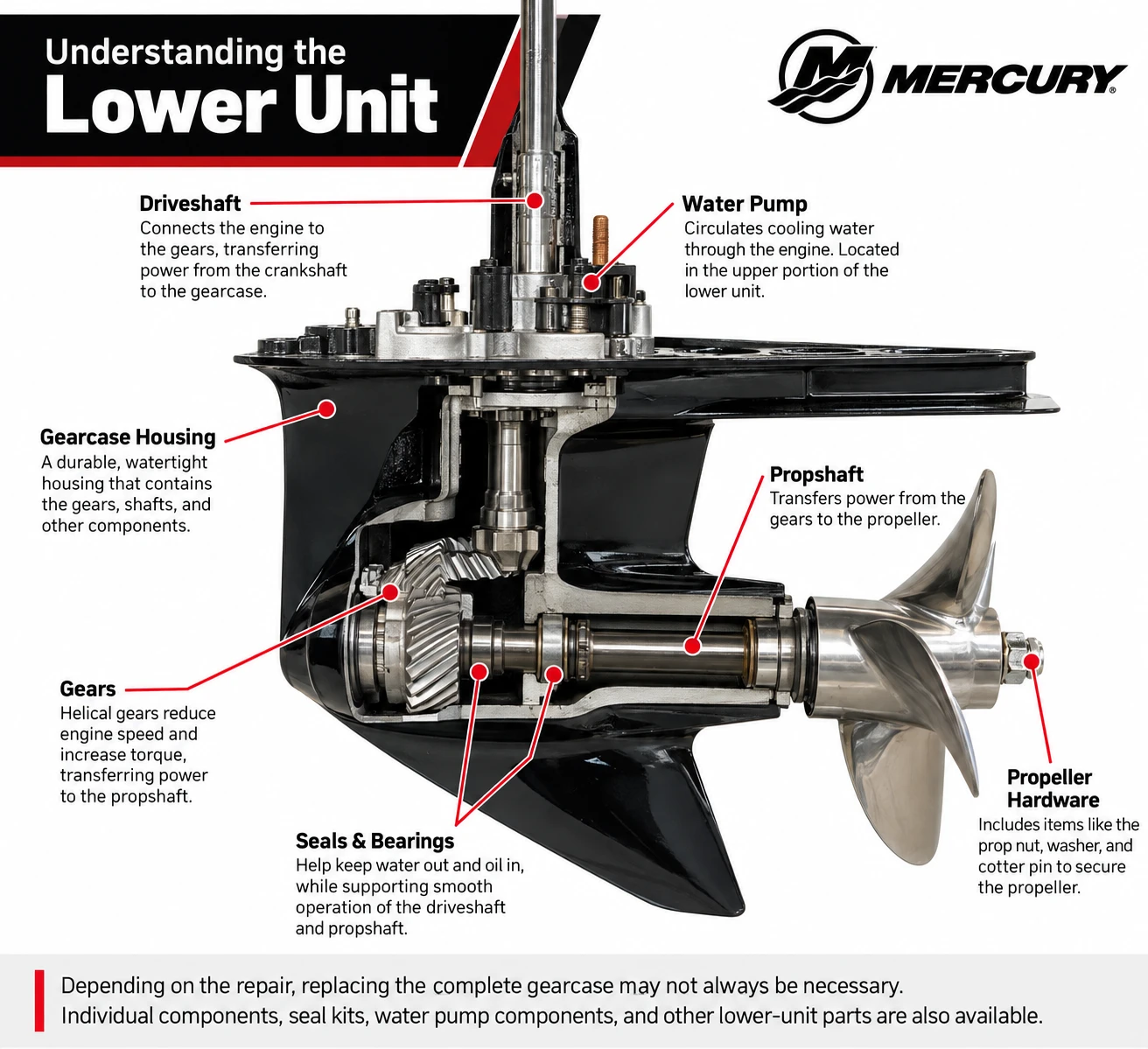
If you're looking for the basics of how a lower unit works, gear ratios, fitment, or how to identify the correct replacement, start with our Mercury Lower Unit & Gearcase Guide. Here, we're focusing specifically on the warning signs that something may be wrong.
1. Milky or Water-Contaminated Gear Lube
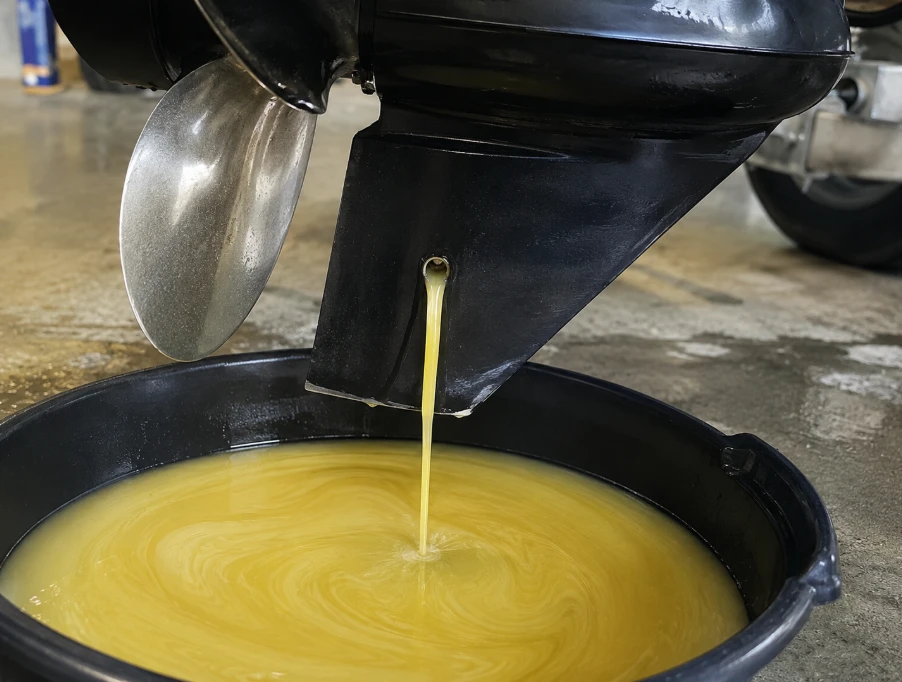
One of the most useful times to evaluate your lower unit is when you drain the old gear lube.
Mercury recommends inspecting the lubricant for water as it drains. Water may come out separately before the lubricant, or it can mix with the oil and give it a milky appearance. Water inside the gearcase can eventually damage bearings and other internal components.
The important thing to remember is that changing milky gear lube does not fix the problem. If water is getting inside, the source of the leak still needs to be identified.
Prop shaft seals, other oil seals, O-rings, sealing surfaces, and related components may need inspection. A pressure check can also be used to determine whether the gearcase is properly sealed.
What to check: Don't just drain and refill milky gear lube. Determine why water entered the gearcase before continuing to operate the engine.
2. Excessive Metal in the Gear Lube
Metal in the old lubricant deserves attention too, but not every metallic particle means the lower unit is failing.
Mercury notes that a small amount of fine metallic material can be the result of normal gear wear. An excessive amount of filings or larger metal chips, however, can indicate abnormal wear that requires further inspection.
This is why it's worth paying attention to what comes out of the gearcase instead of immediately disposing of the old lubricant.
If you're seeing larger pieces of metal rather than a small amount of fine material, continuing to run the engine could allow an internal problem to become more extensive.
What to check: Inspect the drained lubricant and drain plug. Larger chips or an unusual amount of metal deserve further diagnosis.
3. New Grinding, Whining, or Gearcase Noise
Your lower unit contains gears, bearings, shafts, and other components operating under significant load. A new grinding, whining, or mechanical noise shouldn't automatically be blamed on the gearcase, but it shouldn't be ignored either.
Pay attention to when the noise occurs.
Does it appear only in forward? Only in reverse? Does it change under load or with engine RPM? Did it begin immediately after hitting something?
Those details can be much more useful than simply reporting that "the lower unit is making noise."
A damaged propeller can also create vibration and unusual sounds, so inspect the external components before assuming an internal gearcase failure.
What to check: Note when the sound occurs and whether it changes with gear selection, RPM, load, or steering. That information can help narrow down the cause.
4. Difficulty Shifting Into Forward or Reverse
Hard shifting, failure to engage, or an outboard that doesn't seem to stay properly in gear can point toward a problem that needs attention.
However, a shifting problem doesn't automatically mean you need a new lower unit.
The controls, cables, linkage, and adjustment should also be considered before condemning the gears inside the gearcase. If the problem is internal, further inspection may reveal wear or damage to the shifting and gear components.
This distinction matters because replacing an entire gearcase without first diagnosing an external shifting problem could be an expensive mistake.
What to check: If shifting behavior suddenly changes, have the complete shift system evaluated rather than assuming the gearcase itself has failed.
5. Fishing Line Wrapped Around the Prop Shaft
This one is easy to miss because the problem can be hidden behind the propeller.
Fishing line can work its way between the propeller hub and gearcase and wrap tightly around the prop shaft. Over time, propeller thrust can press that line into the prop shaft seal. If the seal is damaged, water can enter the gearcase. Mercury recommends periodically removing the propeller to check for fishing line for exactly this reason.
If you pull line out from around the seal, particularly line that appears embedded or damaged from heat and friction, Mercury recommends checking the gearcase lubricant for water and having the gearcase inspected if contamination is found.
This is a good example of why a seemingly minor problem around the propeller can eventually become a much more expensive lower-unit repair.
What to check: Remove the propeller periodically and inspect around the prop shaft, not just the propeller blades.
6. Vibration or Problems After a Propeller Strike
If you've hit a rock, sandbar, submerged object, or other obstruction, the propeller is the obvious place to look first. It shouldn't necessarily be the last.
Mercury's Flo-Torq hub systems, for example, are designed with sacrificial components that can give way during a hard propeller strike to help protect the prop shaft and gearcase. But an impact can still warrant further inspection, particularly if you notice new vibration, unusual noise, leaking lubricant, visible housing damage, or a change in performance afterward.
A prop shaft can also be affected without an obvious crack in the outside of the gearcase.
What to check: After a significant strike, inspect beyond the propeller. New vibration or other symptoms may justify checking the prop shaft and gearcase as well.
7. Visible Cracks or Damage to the Gearcase
Some lower-unit problems don't require much detective work.
A cracked housing, significant impact damage, or other visible damage should be evaluated before putting the boat back into regular service.
However, visible damage still doesn't automatically answer the repair-or-replace question. A damaged skeg, leaking seal, or individual internal component is a different situation from a damaged housing combined with extensive gear and bearing damage.
That's where the total condition of the lower unit matters.
Our Mercury Lower Unit & Gearcase Guide goes deeper into which components can often be serviced individually, when replacing the complete gearcase may make more sense, and what information you'll need if you're shopping for a replacement.
Does a Bad Lower Unit Always Need to Be Replaced?
No. A lower unit problem does not automatically mean you need a complete replacement gearcase.
Depending on what failed, individual seals, bearings, gears, water pump components, propeller hardware, and other parts may be serviceable.
Replacement becomes a more practical consideration when the housing is badly damaged, internal damage is extensive, or the cost of individual parts and labor begins approaching the cost of a complete gearcase.
That's why diagnosis comes first.
If you're trying to determine what can be repaired, understand the components inside the lower unit, or identify a replacement, visit our Mercury Lower Unit & Gearcase Guide before ordering.
Final Thoughts & Next Steps
Some of the best clues about the condition of a Mercury lower unit appear before the gearcase completely fails. Pay attention to changes in shifting, unusual noises, vibration, visible damage, and especially what you find when inspecting the old gear lubricant.
Our Mercury Lower Unit & Gearcase Guide walks you through lower-unit components, repair vs. replacement, gear ratio, shaft length, rotation, serial-number identification, and how to find the correct Mercury gearcase for your engine.
Need Help With Your Mercury Lower Unit?
If you're dealing with lower-unit damage or need help finding the correct replacement, Gregor's Marine can help with Mercury gearcase identification, genuine OEM Mercury parts, and lower-unit service.
Have your engine serial number available when possible. Mercury lower units can vary by engine family, gear ratio, shaft length, rotation, and production configuration, so horsepower alone isn't enough to confidently identify every replacement.
Call Gregor's Marine at 727-596-5929 or visit our Mercury Lower Unit & Gearcase Guide to get started.
------------------------------------------------------------------------------------------------------------------------
Frequently Asked Questions
What does a bad Mercury lower unit sound like?
A failing lower unit may produce new grinding, whining, or other mechanical noises, but sound alone isn't enough to diagnose a gearcase. Note whether the noise changes with RPM, load, forward or reverse, and inspect the propeller and related components as well.
Does milky lower unit oil mean the gearcase is bad?
Not necessarily. Milky gear lube can indicate water contamination, which may result from a failed seal or another leak. The source should be identified because simply replacing the contaminated lubricant doesn't repair the leak.
How much metal on a lower unit drain plug is normal?
Mercury states that a small amount of fine metal particles can indicate normal gear wear. Excessive filings or larger metal chips can indicate abnormal wear and should be investigated further.
Can fishing line ruin a Mercury lower unit?
It can cause serious problems if it becomes wrapped around the prop shaft and damages the prop shaft seal. A failed seal can allow water into the gearcase, potentially damaging internal components.
Should I replace my lower unit after hitting something?
Not automatically. Inspect the propeller, hub, prop shaft, gearcase housing, and lubricant as appropriate. Whether the lower unit can be repaired or needs replacement depends on what was actually damaged.
Recent Posts
-

Why You Should Change Your Lower Unit Oil Every Year
Why You Should Change Your Lower Unit Oil Every Year Changing your engine oil is a maintenance item …Sep 14th 2026 -

Signs Your Mercury Lower Unit Is Going Bad: What to Check
A lower unit problem doesn't always start with a dramatic failure. Sometimes the first clue is a new …Sep 14th 2026 -

Mercury Avator Electric Outboards: A Complete Guide to Electric Boating
Electric outboards are becoming a real option for more boaters, and Mercury's Avator lineup brings e …Sep 1st 2026