
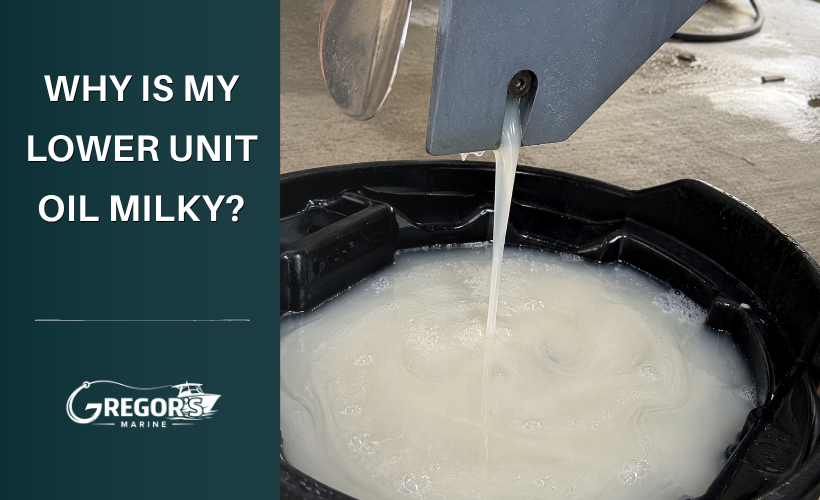
Milky Lower Unit Oil: What It Means and What to Do Next
Draining your lower unit oil is one of the simplest ways to check the health of your gearcase. If the gear lube comes out looking creamy, gray, or milky instead of its normal color, it's a sign that water has entered the lower unit.
While finding milky oil isn't something to ignore, it also doesn't automatically mean you need a new lower unit. The important thing is understanding why it happened and addressing the problem before more serious damage occurs.
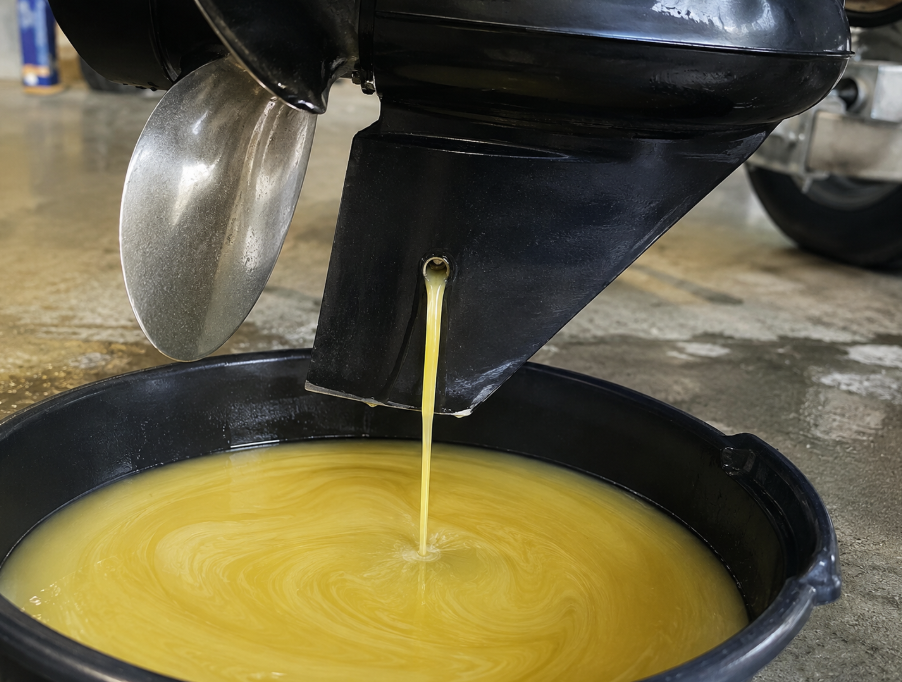
Why Does Lower Unit Oil Turn Milky?
Gear lube and water don't mix well. As the gears inside the lower unit rotate, they churn the water and oil together, creating an emulsion that gives the oil its cloudy or milky appearance.
This mixture doesn't lubricate internal components nearly as well as clean gear lube. The longer it remains in the lower unit, the greater the risk of corrosion and accelerated wear.
How Does Water Get Inside?
A lower unit is designed to be completely sealed, but several things can allow water to enter over time.
Common causes include:
- Worn prop shaft seals
- Damaged drive shaft seals
- Shift shaft seal leaks
- Fishing line wrapped around the prop shaft
- Impact damage from striking underwater objects
- Old or damaged drain plug gaskets
One of the most overlooked causes is fishing line. Even a small amount wrapped tightly around the prop shaft can cut into the seal and create a path for water to enter the gearcase.
Is a Small Amount of Water a Big Deal?
Even a small amount of water should be taken seriously.
A few drops may not immediately damage the gears, but they indicate that the lower unit is no longer completely sealed. If left unaddressed, more water can enter over time, reducing lubrication and increasing the chance of rust, bearing damage, or gear failure.
Finding water early often means a much simpler and less expensive repair.
Simply Changing the Oil Doesn't Fix the Problem
One of the biggest misconceptions is that draining the milky oil and refilling the lower unit solves the issue.
While fresh gear lube is important, it only treats the symptom.
If water entered once, it will likely enter again until the source of the leak is repaired. That's why technicians often pressure test and vacuum test the lower unit after discovering water contamination. These tests help identify where the seal has failed before additional damage occurs.
What If the Oil Looks Fine?
Clean-looking gear lube is a good sign, but it doesn't tell the whole story.
During a lower unit service, technicians also inspect for:
- Metallic debris on the magnetic drain plug
- Burnt or discolored gear lube
- Low oil level
- Unusual odors
Looking at all of these together provides a much better picture of the lower unit's overall condition than color alone.
Final Thoughts & Next Steps
Milky lower unit oil is one of the earliest warning signs that water has entered your gearcase. Catching it during routine maintenance gives you the opportunity to repair a leaking seal before it turns into damaged gears or bearings.
Annual lower unit oil changes are one of the easiest ways to monitor the health of your outboard and help prevent expensive repairs down the road.
Helpful Links:
Frequently Asked Questions
Is milky lower unit oil always caused by a bad seal?
Most of the time, yes. Water usually enters through a worn or damaged seal, although damaged drain plug gaskets or impact damage can also be responsible.
Can I still use my boat if the lower unit oil is milky?
It's not recommended. Water-contaminated gear lube doesn't protect gears and bearings as well as clean oil, and continued operation can increase the risk of internal damage.
How can I help prevent water from getting into my lower unit?
Inspect your propeller regularly for fishing line, replace drain plug gaskets during service, avoid impacts with underwater objects, and change your gear lube annually so any problems are caught early.
Recent Posts
-

Why You Should Change Your Lower Unit Oil Every Year
Why You Should Change Your Lower Unit Oil Every Year Changing your engine oil is a maintenance item …Sep 14th 2026 -

Signs Your Mercury Lower Unit Is Going Bad: What to Check
A lower unit problem doesn't always start with a dramatic failure. Sometimes the first clue is a new …Sep 14th 2026 -

Mercury Avator Electric Outboards: A Complete Guide to Electric Boating
Electric outboards are becoming a real option for more boaters, and Mercury's Avator lineup brings e …Sep 1st 2026