
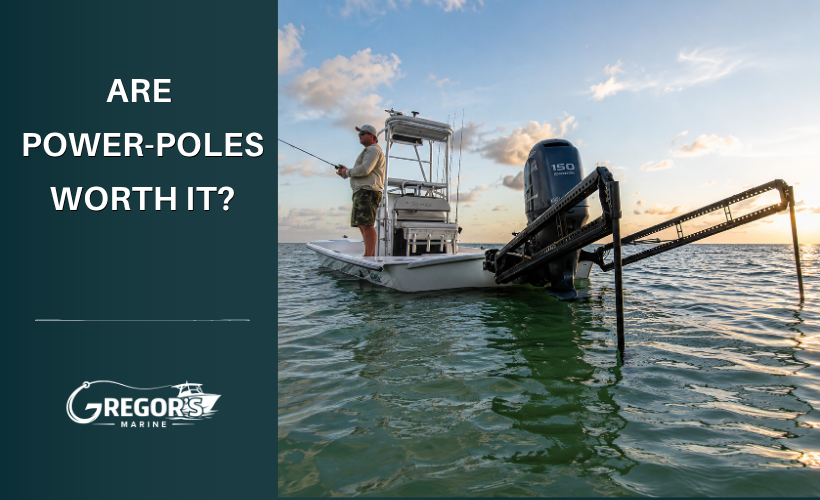
Are Power-Pole Shallow Water Anchors Worth It? A Buyer's Guide
If you've spent any time around bass boats, bay boats, or center consoles, you've probably seen a Power-Pole mounted to the transom. Once considered a niche accessory, shallow water anchors have become one of the most popular upgrades for anglers and recreational boaters alike.
But are they worth the investment?
The answer depends on how and where you use your boat.

What Is a Power-Pole?
A Power-Pole is a hydraulic or electric shallow water anchor that allows you to quietly anchor your boat with the push of a button.
Instead of dropping a traditional anchor and rope, a spike deploys into the bottom to hold your boat in place. Most models are designed for shallow water, making them ideal for fishing flats, sandbars, docks, and shoreline areas.
Deployment takes only a few seconds, allowing you to stop quickly without disturbing the area around you.
When Does a Power-Pole Make the Biggest Difference?
Power-Poles are most beneficial in water where a traditional anchor is inconvenient or too slow to deploy.
Common uses include:
- Sight fishing on shallow flats
- Holding position while rigging tackle
- Waiting at the boat ramp
- Stopping at sandbars
- Docking preparation
- Taking photos or helping another boat
Instead of drifting while trying to complete these tasks, you can secure your boat almost instantly.
Why Many Anglers Won't Go Back
One of the biggest advantages isn't just convenience. It's boat control.
Without a shallow water anchor, many anglers rely on constantly shifting between the trolling motor and the wind to stay in position. A Power-Pole allows you to stop exactly where you want, making it easier to fish a productive area thoroughly without repeatedly repositioning the boat.
It can also help reduce noise compared to dropping a traditional anchor, which is especially important when targeting shallow, easily spooked fish.

Will a Power-Pole Affect Boat Performance?
One question we hear often is whether adding a Power-Pole affects speed or fuel economy.
Like any accessory, it adds weight to the transom. For most recreational boats, the difference is minimal, but additional equipment can slightly change how the boat performs.
If you've added multiple accessories over the years, such as a trolling motor, additional batteries, larger electronics, or dual Power-Poles, it may be worth evaluating whether your current propeller is still the best match for your setup.
Choosing the Right Model
Power-Pole offers several models with different deployment methods, anchoring depths, and features.
The best choice depends on factors such as:
- Boat size
- Transom layout
- Typical water depth
- Fishing style
- Existing accessories
Our team can help determine which model is the best fit for your boat and whether additional mounting brackets or rigging components are needed.
Final Thoughts & Next Steps
A Power-Pole isn't just a convenience upgrade. For many boat owners, it completely changes how they fish and enjoy their time on the water. Whether you're holding position over a fishing spot, spending the day at a sandbar, or preparing to dock, having instant shallow water anchoring can make boating easier and more enjoyable.
As an authorized Power-Pole dealer, our team can help you choose the right model, answer installation questions, and ensure everything is properly matched to your boat.
- Request a Power-Pole Installation Quote
- Learn More about Power Pole Anchoring
Frequently Asked Questions
Can I install a Power-Pole on any boat?
Power-Poles are compatible with many bay boats, bass boats, center consoles, and some pontoons, but compatibility depends on your boat's transom design and available mounting options.
Can I use a Power-Pole in deep water?
No. Power-Poles are designed specifically for shallow water anchoring. In deeper water, you'll still need a traditional anchor or another positioning system.
Is one Power-Pole enough, or do I need two?
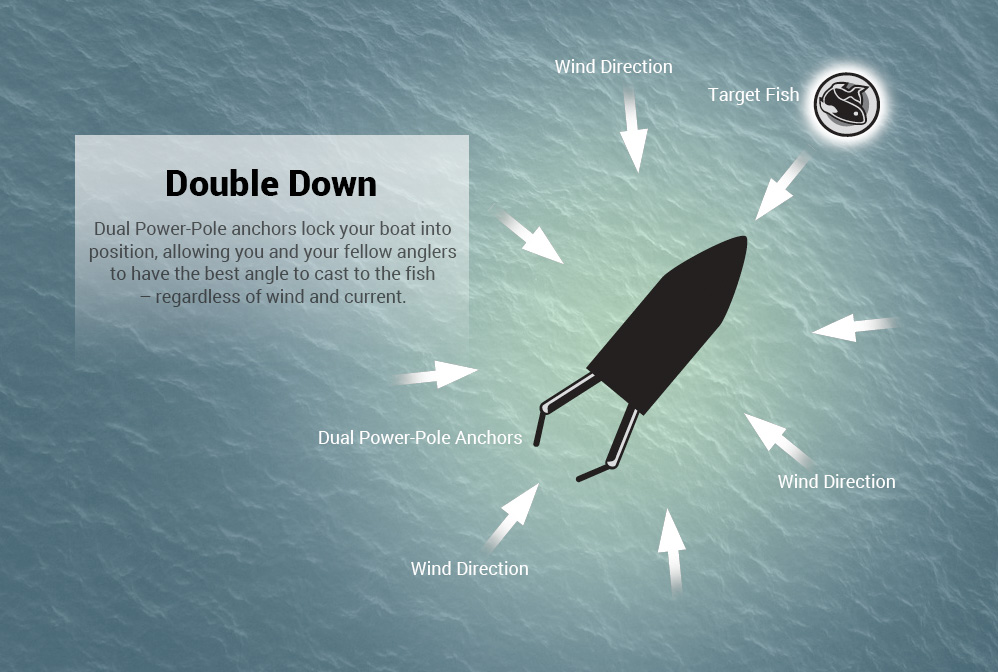
For many smaller boats, a single Power-Pole works well. Larger boats or anglers looking for maximum stability often choose dual anchors to help keep the boat from pivoting in wind or current.
Recent Posts
-
Why You Should Change Your Lower Unit Oil Every Year
Why You Should Change Your Lower Unit Oil Every Year Changing your engine oil is a maintenance item …Sep 14th 2026 -

Signs Your Mercury Lower Unit Is Going Bad: What to Check
A lower unit problem doesn't always start with a dramatic failure. Sometimes the first clue is a new …Sep 14th 2026 -
Mercury Avator Electric Outboards: A Complete Guide to Electric Boating
Electric outboards are becoming a real option for more boaters, and Mercury's Avator lineup brings e …Sep 1st 2026